LOCAL PERSPECTIVE
The short version
English Harbour is a historic district, international yachting centre, tourism workplace and residential community. It changes dramatically with the season and looks different from each side of the harbour.
Why English Harbour became important
The deep, protected natural harbour offered strategic shelter during the colonial era. The naval facilities now known as Nelson’s Dockyard developed within a landscape already shaped by Indigenous presence, plantation slavery and regional trade. The surviving stone buildings are impressive, but the full story includes the enslaved and free labourers who built and maintained the complex.
Nelson’s Dockyard and the modern heritage district
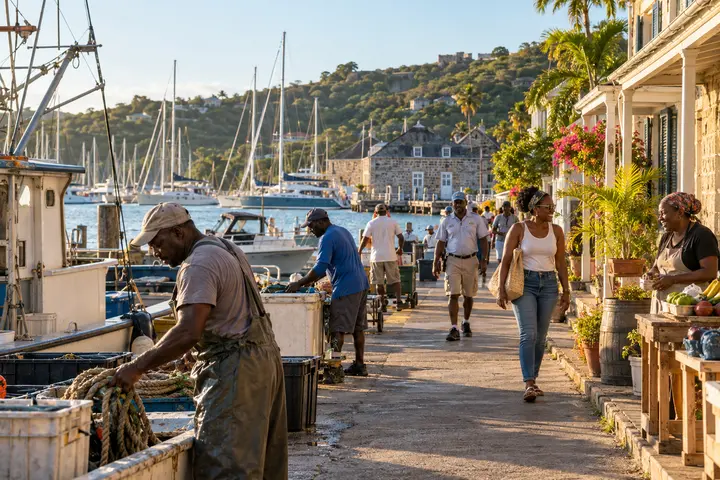
Today the restored Dockyard anchors the UNESCO-listed area and remains a working marina. Museums, restaurants, hotels and marine services occupy historic buildings. Visitors often see the polished waterfront first, yet the wider district includes Falmouth, Cobbs Cross, Liberta connections, residential streets, staff housing and businesses that function beyond the heritage boundary.
How yachting shapes work and seasonality
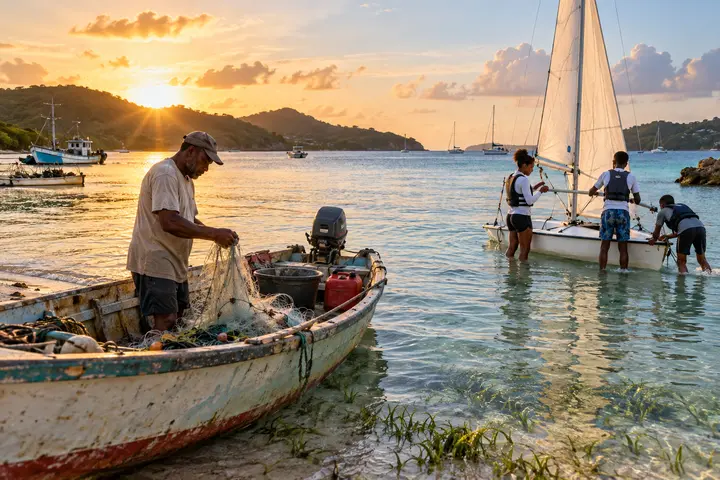
From roughly the cooler northern winter through the major regattas, visiting yachts increase demand for technicians, cleaners, dockhands, provisioning, restaurants, taxis and accommodation. The quieter season feels different: some businesses reduce hours, boats leave and maintenance begins. Income can be highly seasonal, which affects workers and small businesses long after the visitors depart.
Galleon Beach and the outer harbour
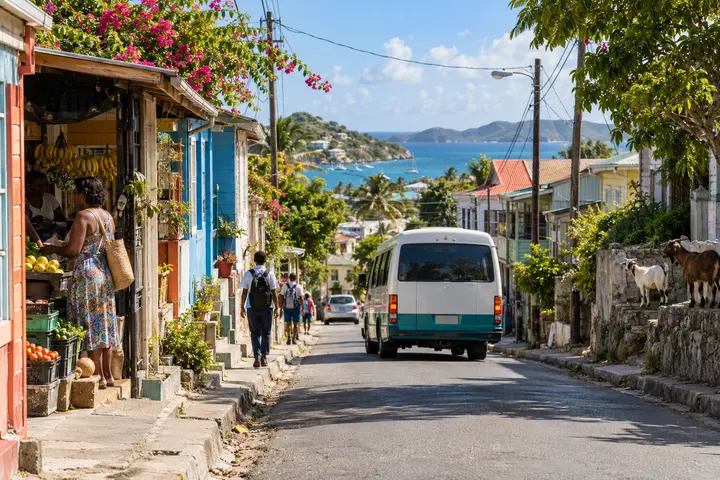
Across the water from the Dockyard side, Galleon Beach lies on Freeman’s Bay near the harbour entrance. The setting is more coastal than commercial, with swimming, snorkeling, trails and views toward the Pillars of Hercules. It provides a useful reminder that English Harbour is a landscape of bays, hills and communities—not one marina.
Nightlife, events and living beside a destination
Restaurants, bars, yacht events and Sailing Week can make the area feel energetic and international. Residents also deal with traffic, parking, music, rising property demand and seasonal employment. A successful tourism district creates opportunity while raising genuine questions about housing, access and who benefits from growth.
How to visit English Harbour respectfully
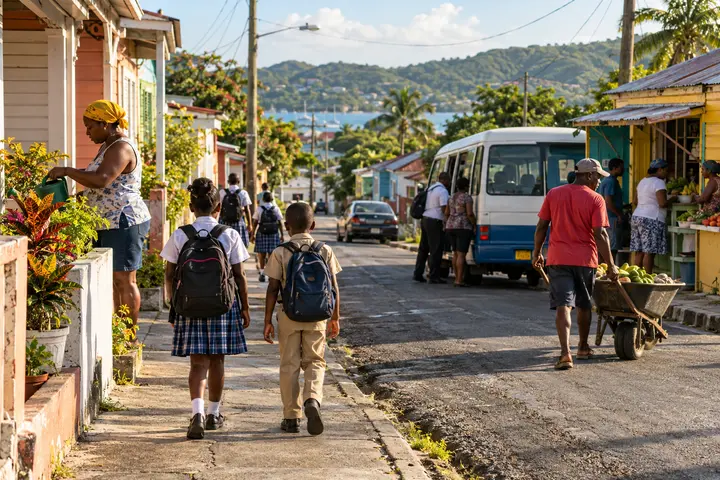
Walk where possible, park without blocking homes or businesses and remember that many staff commute from elsewhere in Antigua. Spend with locally operated companies, learn the history beyond the naval headline and explore both the waterfront and surrounding landscape. English Harbour becomes far richer when seen as a living community rather than a preserved stage.
A NOTE ON PERSPECTIVE
No single voice represents every Antiguan.
This guide reflects local experience and careful review, but communities, households and generations differ. Where a subject deserves several voices, treat this as a starting point rather than the final word.