LOCAL PERSPECTIVE
The short version
Daily life in Antigua is a mix of early school runs, work, family responsibilities, traffic, small-business hustle and community connections. Tourism is highly visible, but it is only one part of a working country.
Morning begins earlier than the holiday version of Antigua
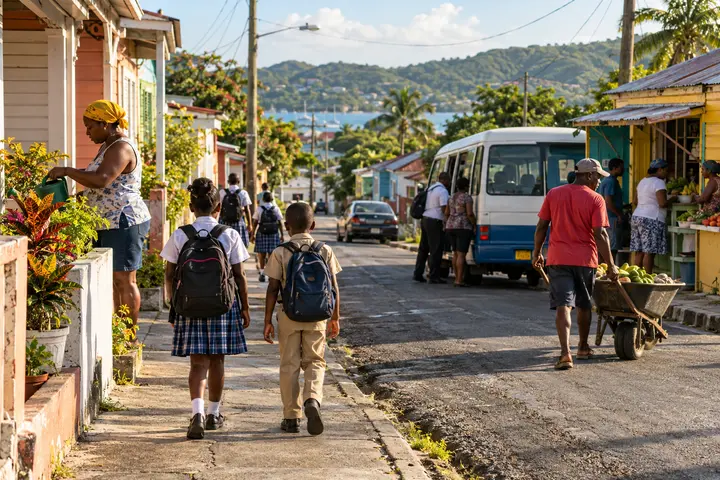
By the time many visitors are considering breakfast, households may already be preparing children for school, waiting for a bus, opening a shop or driving toward St John’s. Uniforms, lunch bags, traffic and last-minute errands shape the morning. School drop-off and the journey into the capital can make a short distance feel much longer than it appears on a map.
Tourism matters, but everyone does not work in a hotel
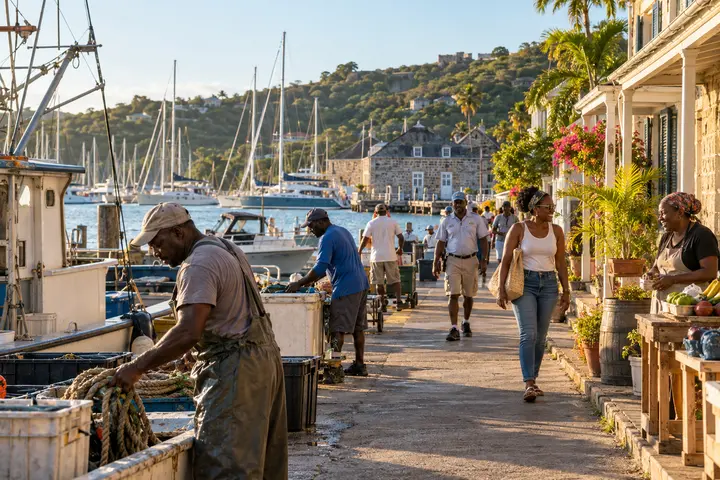
Hotels, restaurants, yachting, taxis and tours support many livelihoods, particularly around English Harbour and the main resort areas. Antiguans also work in government, education, healthcare, construction, finance, retail, farming, fisheries and professional services. Many people combine salaried work with a small business, weekend service or family enterprise.
Getting around changes the shape of the day
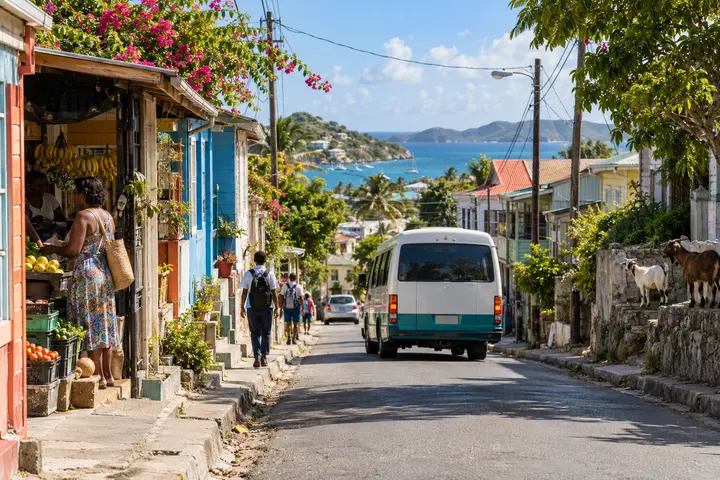
Antigua is compact, but transport is not always simple. Buses follow useful corridors, yet schedules and routes may not match every workplace. Car ownership brings fuel, insurance and maintenance costs. Narrow roads, school traffic, cruise-port activity and rain can disrupt an otherwise straightforward journey, so residents often build flexibility into their plans.
Family responsibilities overlap with work
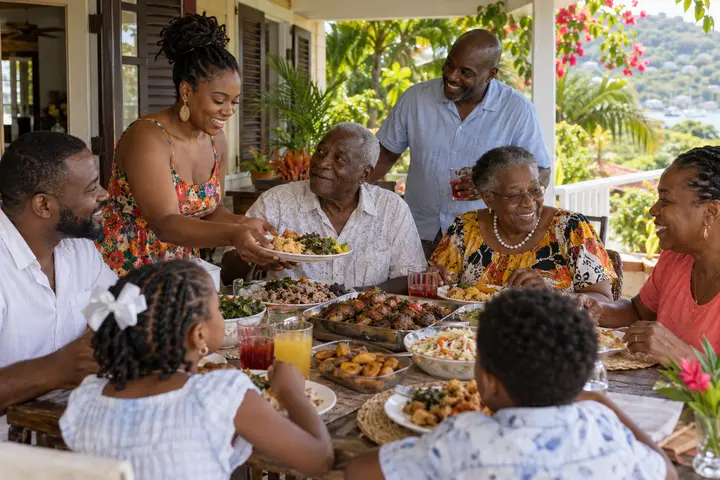
On a small island, family networks are close and obligations are visible. A working adult may also collect a child, check on an older relative, help with a family business or attend a community meeting. The person a visitor meets as a guide, server or driver has a fuller life outside that role, often with several responsibilities compressed into one day.
Evenings are not one continuous beach party
After work, people cook, help with homework, exercise, attend church activities, play sport, run errands or simply rest. Some evenings revolve around cricket, football, a roadside lime or nightlife; others are deliberately quiet. Living near beautiful beaches does not mean residents visit them daily, just as living in a famous city does not mean visiting its landmarks every afternoon.
What visitors can learn from ordinary Antigua
Slow down enough to notice routines rather than only attractions. Greet people, respect school and work traffic, use local shops and understand that service workers are not part of a resort set. The most honest view of Antigua appears in the spaces between scheduled excursions: the bakery queue, the bus stop, the village shop and the conversation before business begins.
A NOTE ON PERSPECTIVE
No single voice represents every Antiguan.
This guide reflects local experience and careful review, but communities, households and generations differ. Where a subject deserves several voices, treat this as a starting point rather than the final word.