LOCAL PERSPECTIVE
The short version
Antigua Carnival is a season of music, mas, competition, food and community rooted in emancipation. The parade is the visible climax of months of creative and organisational work.
Why Carnival is connected to emancipation
Antigua’s modern Carnival commemorates emancipation and expresses freedom through public celebration. That history matters: costumes and parties are not detached entertainment but part of a longer Caribbean tradition of reclaiming streets, bodies, music and identity after slavery. Visitors should enjoy the spectacle without forgetting the reason celebration became politically meaningful.
Carnival is a season, not one parade
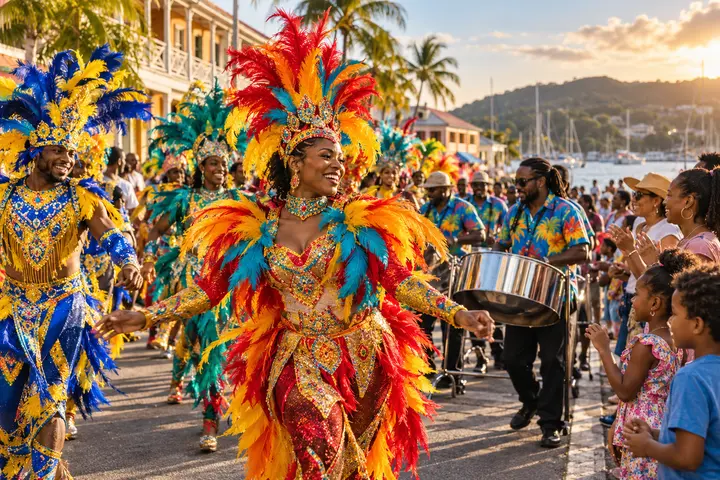
Calypso, soca, steel pan, queen and youth competitions, rehearsals, fetes and community events build over time. Bands design themes, make costumes and organise logistics long before the road march. Official dates and event formats can change each year, so travellers should confirm the current calendar rather than relying on an old itinerary.
What happens at J’ouvert
J’ouvert begins very early and is louder, messier and more spontaneous than the main daytime parade. Music trucks and crowds move through St John’s, with paint, powder, mud or water sometimes involved depending on the band and year. Wear practical clothing, protect valuables, arrange transport and understand that watching from the edge differs from joining a troupe.
Mas, music and competition
Costume bands combine design, craftsmanship, choreography and performance. Calypso traditionally carries social commentary, while soca drives much of the road energy. Steel pan remains an important musical form. Judging and competition create strong loyalties, so Carnival conversation often includes debate about results as much as admiration for costumes.
Planning for heat, crowds and transport
Hydrate, wear comfortable shoes, protect yourself from sun and decide where your group will meet if separated. Roads close and parking becomes difficult. Use established transport, avoid carrying unnecessary valuables and follow local security guidance. Families should choose events and viewing areas appropriate to children’s ages and tolerance for noise.
How to participate respectfully
Buy from local vendors, ask before photographing an individual closely and do not touch costumes without permission. If joining a band, follow its rules and registration process. Carnival welcomes visitors, but it is not a costume backdrop created for them; it is an Antiguan cultural event whose participants have invested time, money and identity.
A NOTE ON PERSPECTIVE
No single voice represents every Antiguan.
This guide reflects local experience and careful review, but communities, households and generations differ. Where a subject deserves several voices, treat this as a starting point rather than the final word.