
QUICK ANSWER
What you need to know
Sea turtles may be encountered in Antigua’s coastal waters, including around seagrass and reef habitat. Galleon Beach and the English Harbour area are among the places where guided Skylork guests may see turtles, but no ethical operator can guarantee a wild-animal sighting.
Which sea turtles occur around Antigua?
Green turtles and hawksbill turtles are the two species a snorkeler is most likely to associate with shallow Caribbean habitat around Antigua. Green turtles often use coastal seagrass and algae as food, especially after juveniles move into nearshore foraging grounds. Hawksbills are closely associated with coral-reef habitat and have a narrower, beak-like head suited to feeding among reef structure.
Leatherback turtles also occur in the wider region and nest on Caribbean beaches, but they are open-ocean animals and should not be presented as a normal shallow-water snorkel sighting.
Why seagrass matters
A seagrass bed may look less dramatic than coral at first glance, but it is active feeding habitat. Green turtles crop seagrass and algae, surfacing periodically to breathe. Rays, juvenile fish and other animals also use sandy and vegetated areas. This is why a guide may slow down over what looks like an open patch rather than rushing directly toward rock or reef.
Why reef edges matter
Reef structure provides shelter, food and cleaning opportunities for many fish and invertebrates. Hawksbills are more strongly tied to reefs than green turtles, while green turtles may move between grass, reef and open water. The boundary between habitats can be especially interesting because several kinds of marine life use the same transition zone.
How to look without harassing wildlife
Responsible searching is patient: scan the bottom for shell shapes and movement, watch the surface for a turtle breathing, and pay attention to habitat instead of driving directly at an animal. Once a turtle is located, reduce speed and let the animal choose the distance.
Skylork reports turtle sightings on approximately 99% of its Scooter Snorkeling tours, based on the team’s own tour observations. This describes tours where turtles were seen, not a guarantee for every guest. Conditions and sightings vary.
How to behave when a turtle appears
- Approach slowly from the side rather than directly behind.
- Do not touch, chase, feed, block or surround the turtle.
- Leave a clear route to the surface so it can breathe.
- Keep fins and scooters away from the animal and seabed.
- If the turtle changes direction, let it go.
The most successful encounter is one in which the turtle continues feeding, resting or swimming naturally.
What you may notice besides turtles
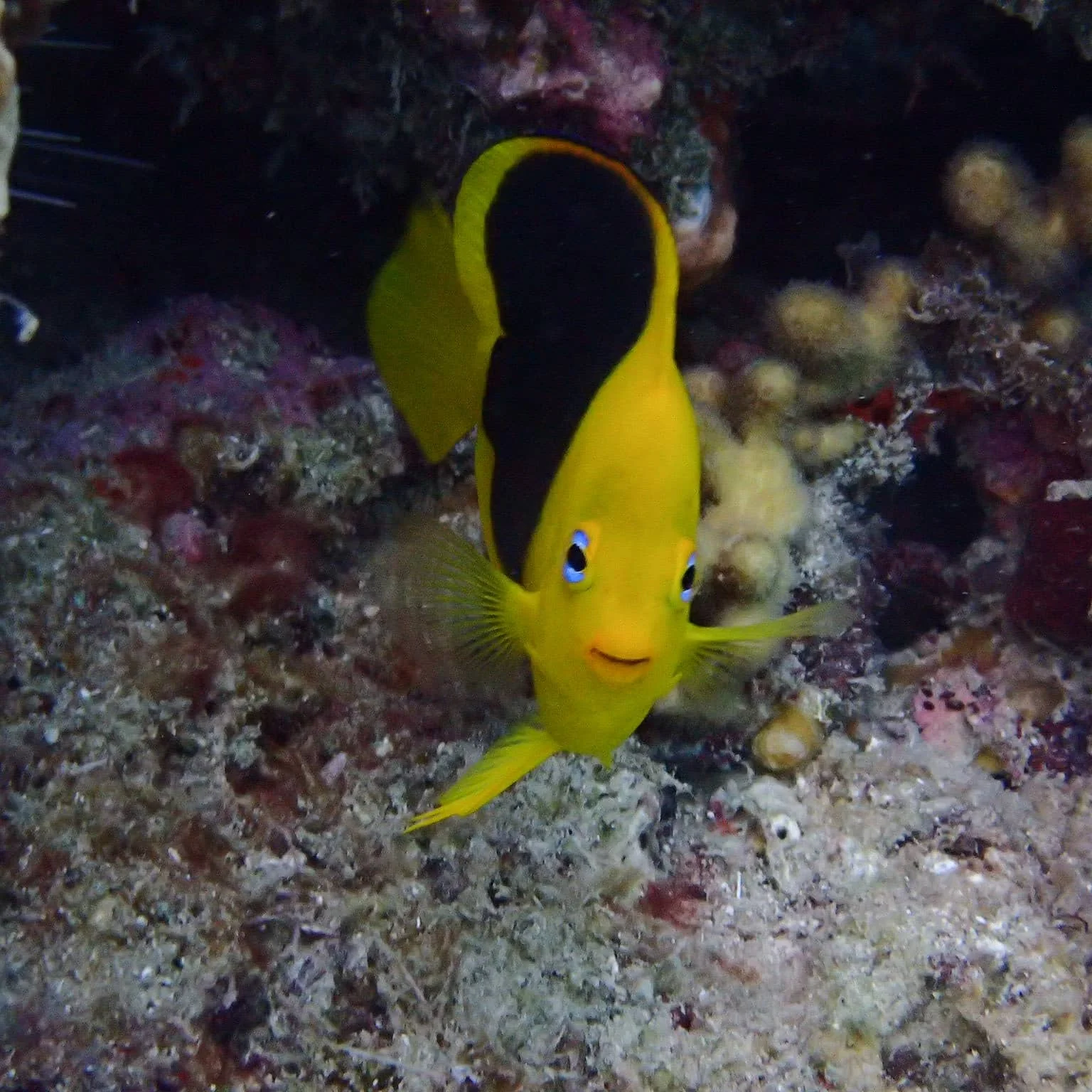
Tropical fish moving along reef edges, rays passing over sand, the texture of seagrass and the changing colour of the bottom are all part of the same habitat story. Looking widely makes the snorkel richer and also prevents a group from crowding one animal.
Scooter or classic snorkeling?
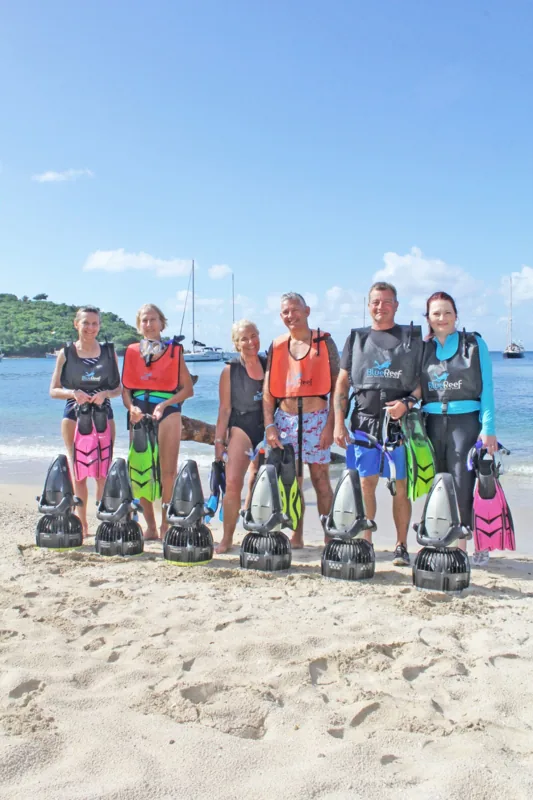
Choose Scooter Snorkeling when the powered glide is a major part of the appeal. Choose Swim with Turtles for a conventional mask, snorkel and fin experience. Both are guided, require swimming ability and include complimentary photos. Neither uses the promise of a wild animal as a substitute for the experience itself.
Plan enough time
Skylork asks snorkeling guests to allow about 2.5 hours overall. That includes preparation, an approximately 30-minute orientation and safety briefing, the water session, photos and changing. Review the health and participation guidance before booking and arrive without having consumed alcohol.
Questions visitors ask
Are turtles guaranteed on an Antigua snorkeling tour?
No. Sea turtles are wild animals and sightings cannot be guaranteed.
Can I touch a sea turtle?
No. Observe without touching, chasing, blocking or crowding the animal.
Which Skylork activity is best for turtles?
Both Scooter Snorkeling and Swim with Turtles may encounter turtles. Choose based on whether you want a powered sea scooter or classic snorkeling.
FROM THE WATER
A turtle encounter should stay on the turtle’s terms
When a turtle is feeding or resting, the guide’s job is to manage people—not the animal. Slower movement, a loose viewing arc and a clear path to the surface usually produce a longer, calmer observation than everyone trying to move closer.