QUICK ANSWER
What you need to know
Antigua snorkelers may encounter sea turtles, rays, schools of tropical fish and smaller reef animals. What appears changes with habitat, conditions and animal movement, so think in terms of possibilities—not a guaranteed species checklist.
Habitats shape what you notice
Seagrass, sand, rock and reef each support different activity. A turtle feeding over seagrass is a different encounter from a school of small fish holding near structure. Looking carefully at the habitat often reveals more than swimming quickly in search of one large animal.
Turtles, rays and fish
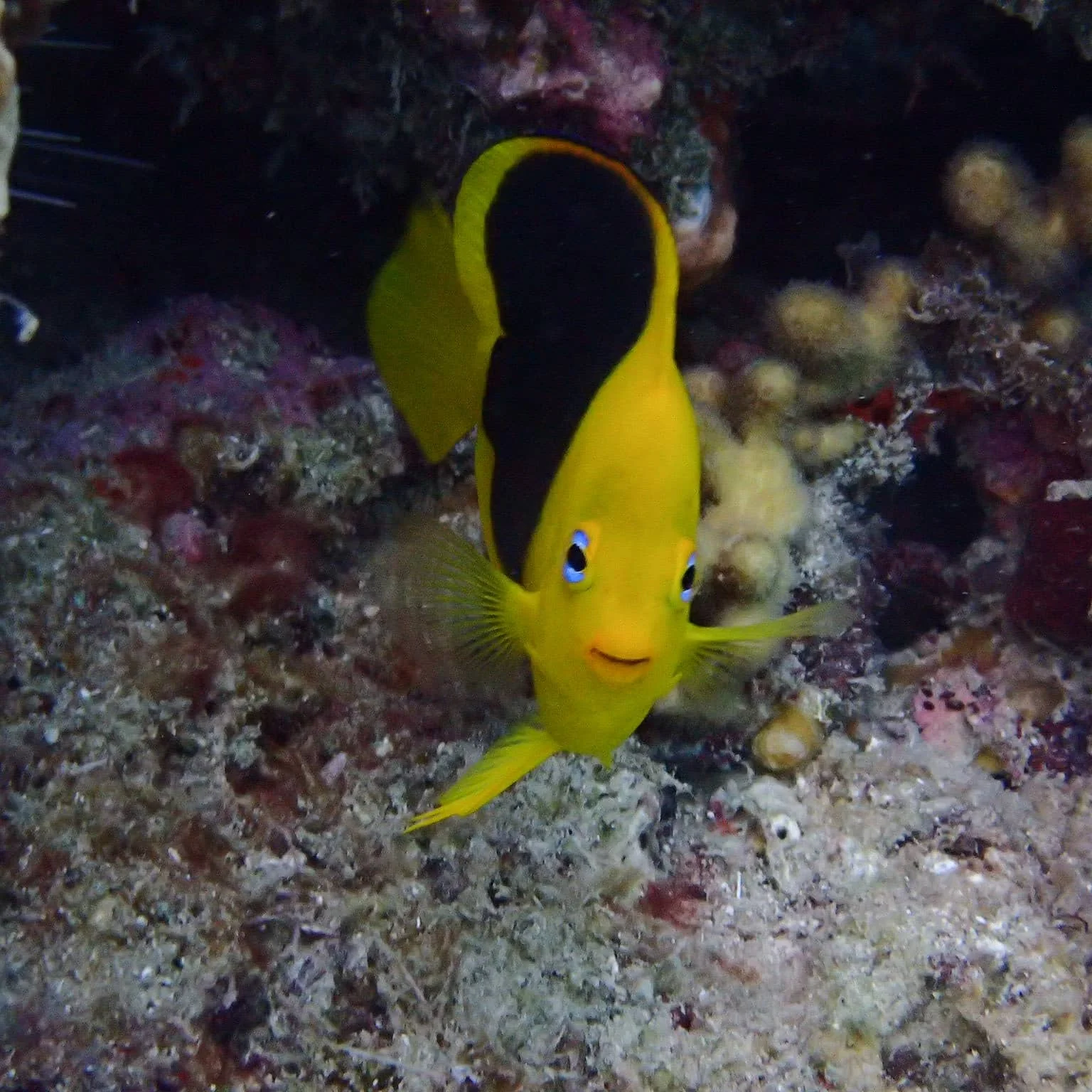
Sea turtles are a highlight for many visitors and may be seen around suitable feeding habitat. Rays can pass over sand or rest with much of their body hard to distinguish. Tropical fish use reef and rocky areas for shelter and feeding. Names are useful, but calm observation matters more than completing a list.
Look small as well as large
Snorkelers who slow down may notice texture, camouflage and movement close to the reef. Do not handle shells, starfish or other animals for a photograph. An object that looks empty may still be part of a living habitat.
Responsible snorkeling protects the encounter
- Keep fins and equipment clear of the seabed.
- Do not feed, touch or chase animals.
- Give turtles room to surface.
- Secure loose items before entering.
- Follow the guide’s direction and pace.
Choose a marine-focused experience
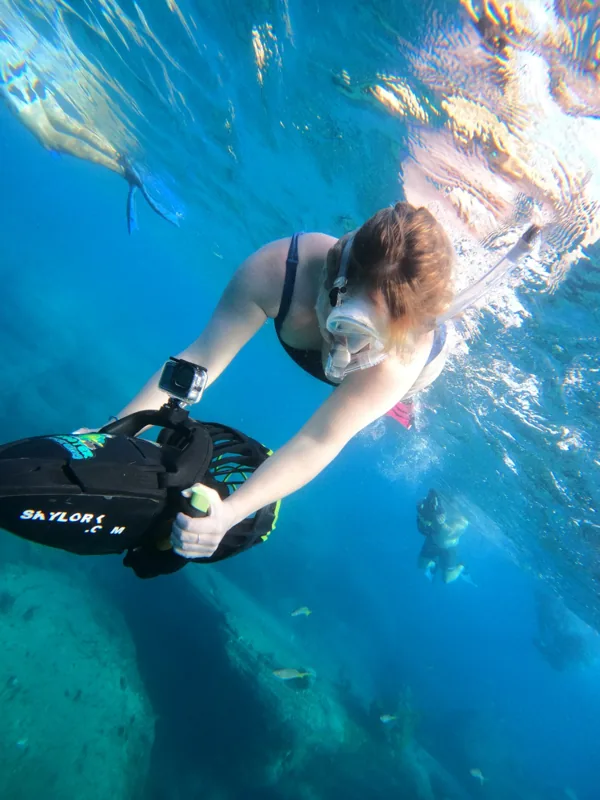
Swim with Turtles offers classic guided snorkeling. Scooter Snorkeling adds powered movement. Both include complimentary photos, but neither can promise a specific wild animal. Explore the Skylork photo gallery for genuine examples from past outings.
FROM THE WATER
Slow observation reveals more than a checklist
Look beyond one large animal: habitat edges, small movements over sand and fish using reef structure all tell part of the story. That wider attention makes the water interesting even before a turtle appears.