QUICK ANSWER
What you need to know
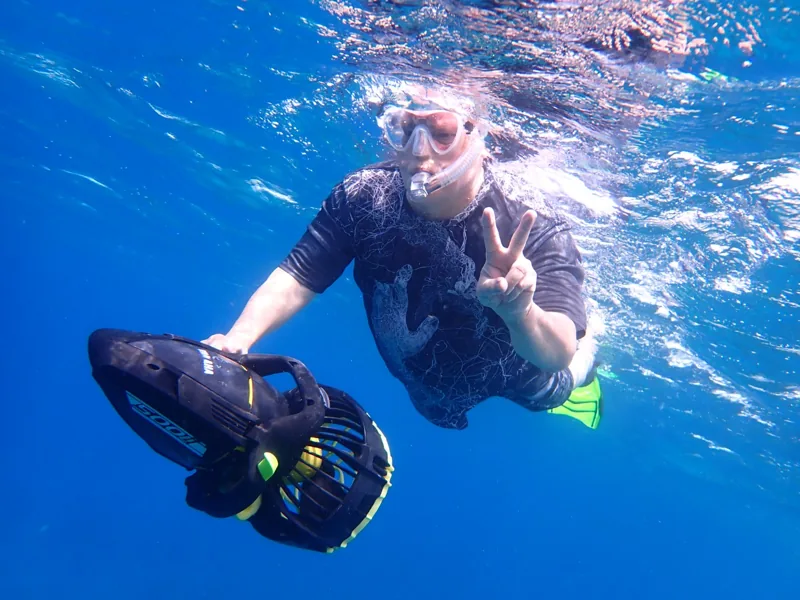
Sea scooter snorkeling uses a hand-held, battery-powered device that provides propulsion while you snorkel. You hold and steer the scooter after an orientation, but you still need to swim, breathe through a snorkel, control your position and follow the guide.
What a sea scooter actually is
A sea scooter is a compact battery-powered water propulsion device held in front of the user. An enclosed propeller moves water through the unit and pulls the snorkeler forward. It does not supply air, hold a course by itself or turn snorkeling into scuba diving.
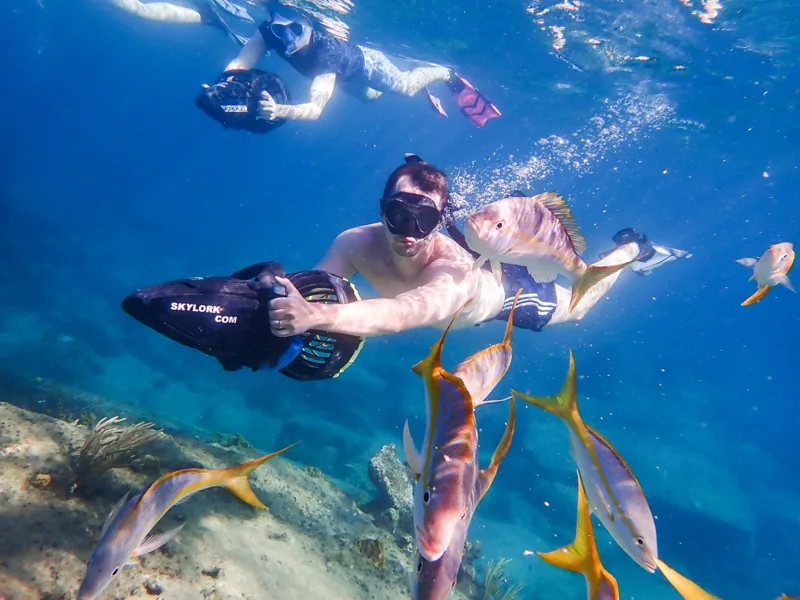
For Skylork’s experience, the scooter is part of a guided surface activity. The attraction is the controlled glide: reef, seagrass and sand pass below while the user steers with small changes in arm direction and body position.
What using one feels like
The first sensation is usually acceleration through the hands and shoulders, followed by a smoother glide once the body settles behind the unit. Looking forward too much can make a new user stiff; looking down and ahead, relaxing the legs and keeping the scooter level usually feels more natural.
Speed is only one part of the fun. The more useful skill is control—slowing near the group, holding a comfortable line and turning without swinging the scooter toward another person.
How you start, stop and steer
The exact controls are demonstrated on the equipment provided. In general, the user holds the handles, engages the controls to move and releases them to stop powered propulsion. Steering comes from pointing the unit gradually in the intended direction while keeping the body streamlined behind it.
A wide, gentle turn is easier to control than a sudden twist. The guide establishes spacing before the group moves together, and guests practise close to shore before beginning the route.
What happens during orientation
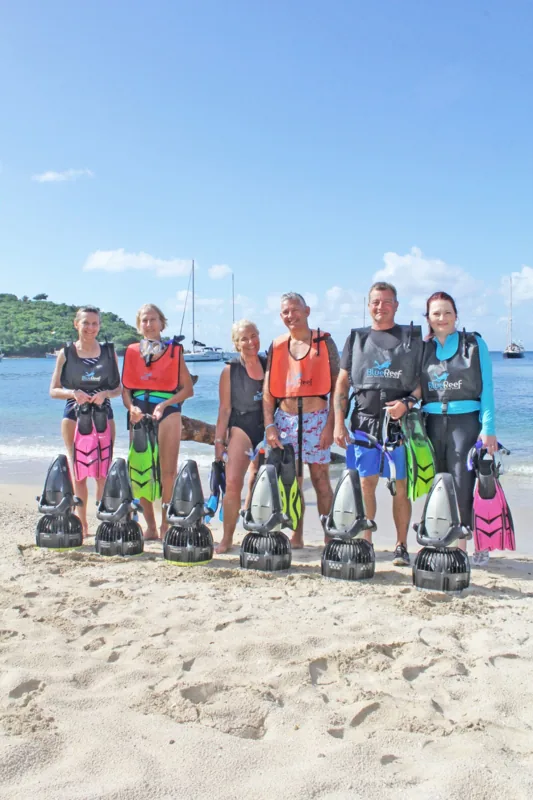
Skylork allows approximately 30 minutes for orientation and safety briefing. The team covers mask and snorkel fit, scooter grip, starting and stopping, steering, group signals, entry and exit, spacing and what to do if a guest needs assistance. This is hands-on preparation, not a formality before the “real” tour.
Can beginners use a sea scooter?
Yes, a first-time scooter user can learn the controls during the orientation. Previous snorkeling experience is helpful but not required. Swimming ability is required: the user must be comfortable entering open water, breathing through a snorkel and moving without depending on the motor.
A non-swimmer should not book Scooter Snorkeling. Flotation support and powered equipment are safety aids within an activity for swimmers, not replacements for the ability to swim.
Can you go underwater?
The scooter does not provide breathing gas. Skylork’s experience is surface-first, using a mask and snorkel. A comfortable guest may make a brief breath-hold dip only when the guide and the activity context allow it, then return to the surface to breathe. Going below is optional; safe control at the surface matters more.
What if the scooter stops?
Release the controls, stay calm, remain with the group and signal the guide. Because participants are swimmers and the activity is guided, a stopped motor changes the propulsion—not the basic ability to float, swim and follow assistance. Do not open, strike or attempt to repair equipment in the water.
Sea scooter versus traditional snorkeling
| Feature | Sea scooter snorkeling | Traditional snorkeling |
|---|---|---|
| Movement | Powered glide controlled by the user | Fin kicks and swimming |
| Breathing | Mask and snorkel at the surface | Mask and snorkel at the surface |
| Technique | Grip, trigger control, steering and spacing | Fin technique, body position and pace |
| Swimming ability | Required | Required for Skylork’s tour |
| Main appeal | The equipment and sensation are part of the adventure | A quieter, familiar way to observe habitat |
How it differs from scuba and SNUBA
Scuba divers carry a breathing system and can remain underwater at depth with the required training and supervision. SNUBA uses breathing gas supplied from the surface through a hose. Sea scooter snorkeling does neither: you breathe through a normal snorkel at the surface and use the motor only for movement.
That makes the experience easier to understand, but not suitable for everyone. It remains an open-water activity with swimming and health requirements.
How to move around coral and wildlife
Use less power and more patience near reef structure or animals. Never drive at a turtle, run the scooter close to coral, drag equipment, stand on reef or use the unit to hold position against the seabed. The guide may redirect the group before anyone feels “close enough” for a photograph; that protects both control and marine life.
Control habits covered in orientation
- Use a relaxed grip rather than tiring the arms
- Point the scooter gradually instead of making abrupt turns
- Watch the route and group, not only the equipment
- Maintain the spacing established by the guide
- Treat control—not full speed—as the goal
- Keep a steady snorkeling breathing rhythm
The orientation gives guests time to practise these habits before the guided route begins.
The Skylork experience at Galleon Beach
Skylork’s signature Scooter Snorkeling experience starts from shore at Galleon Beach in English Harbour. The guided water portion is one hour. Complimentary photos are included, and guests should allow about 2.5 hours overall for check-in, orientation, equipment fitting and wrap-up.
The route connects the novelty of the scooter with the real place: Antigua’s harbour entrance, seagrass, reef edges, marine life and coastline. Review the activity page for current participation requirements and live availability.
Questions visitors ask
Do I need to be able to swim?
Yes. A sea scooter provides propulsion but is not a substitute for swimming ability.
Do I breathe underwater?
No. You breathe through a normal snorkel at the surface; the scooter provides movement, not air.
Is it difficult to control?
Most first-time users can learn the basic controls during the orientation. Smooth steering and spacing matter more than speed.
Can I dive below the surface?
The experience is surface-first. Brief breath-hold dips may be possible under guide instruction, but going below is optional and the scooter does not provide air.
Are photos included?
Yes. Complimentary tour photos are included.
FROM THE WATER
Control creates the smooth glide
Skylork teaches relaxed arms, gradual turns and clear spacing before the guided route begins. Full speed is not the measure of a good sea-scooter experience; comfortable, predictable control is.