LOCAL PERSPECTIVE
The short version
Antiguans eat far more than one national dish. Fungee and pepperpot are important cultural foods, but everyday tables also feature saltfish, chop-up, ducana, seasoned rice, provisions, stewed meats, fresh fish, soups and recipes that change from household to household.
Fungee and pepperpot: the national dish
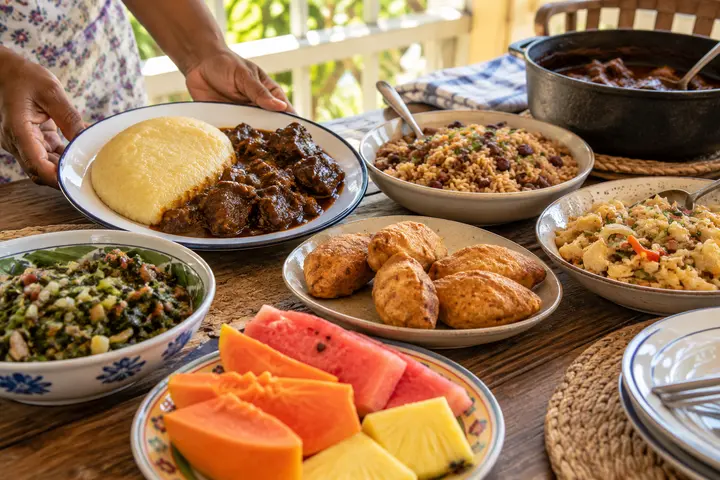
Fungee is made by stirring cornmeal and water until it becomes smooth, firm and satisfying. It is commonly paired with pepperpot, a slow-cooked stew built around vegetables and greens and sometimes meat. The combination represents resourcefulness, African continuity and family cooking, but it is not necessarily what every Antiguan eats every week. Recipes differ, and many people associate the dish with particular cooks, homes or occasions.
Ducana, saltfish and chop-up
Ducana is a lightly sweet dumpling usually made with grated sweet potato, coconut, sugar and spice, wrapped and boiled. Its sweetness works especially well beside savoury saltfish and chop-up—a mixture that may include spinach, eggplant, okra and other vegetables. The plate is memorable because it combines sweet, salty and earthy flavours rather than relying on one dominant taste.
What an ordinary Antiguan meal looks like
Weekday meals are practical. Rice, macaroni, ground provisions, lentils, stewed chicken, fish, salad and one-pot dishes appear often. Breakfast can include saltfish, eggs, chop-up, johnny cakes or patties; lunch is frequently the largest meal. Imported ingredients have become part of modern eating, so “local food” is not frozen in the past—it changes with prices, work schedules and what is available.
Sunday lunch and special occasions
Sunday lunch is less about one mandatory menu than about time and company. A larger spread may include rice, baked or stewed meat, fish, macaroni pie, provisions, vegetables and salad. Christmas, Easter, funerals, family reunions and community events have their own expectations. The person cooking, the family tradition and the occasion often matter as much as the name of the dish.
Where visitors can try Antiguan food
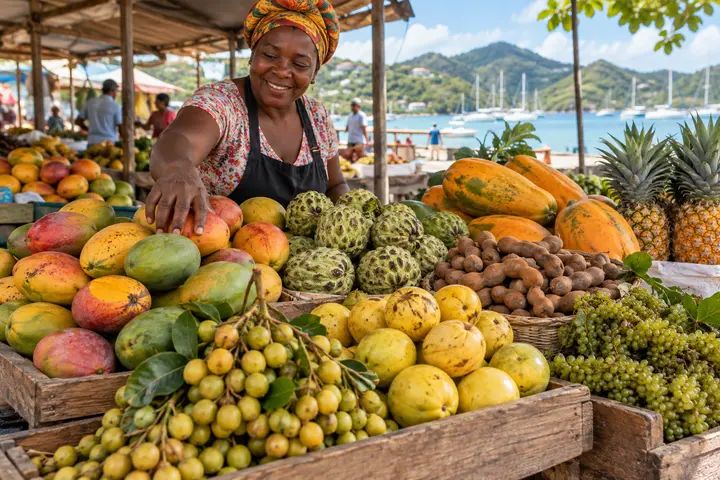
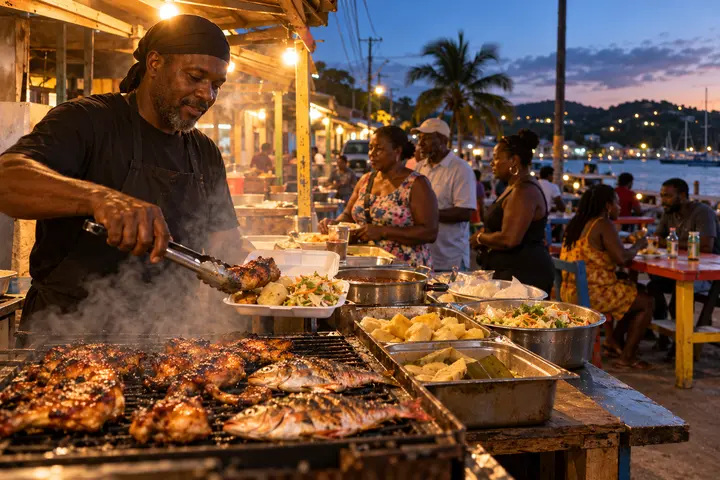
Look beyond hotel buffets. Roadside breakfast counters, small village restaurants, market vendors, Friday or weekend grills and family-run lunch spots are often better introductions. Ask what was cooked that day instead of demanding a fixed checklist. Popular items may sell out, and the best plate may be the daily special rather than the dish most frequently named online.
How to order without treating food as a performance
Begin with a greeting, ask what is available and be open to unfamiliar combinations. Do not describe a home-style plate as “strange” before tasting it, and avoid turning the cook into a cultural exhibit. Ask how the dish is eaten and what the cook recommends. Food becomes more meaningful when you understand the occasion, memory and person behind it.
A NOTE ON PERSPECTIVE
No single voice represents every Antiguan.
This guide reflects local experience and careful review, but communities, households and generations differ. Where a subject deserves several voices, treat this as a starting point rather than the final word.