LOCAL PERSPECTIVE
The short version
Antigua’s roadside food ranges from breakfast counters and fruit stalls to lunchtime kitchens and evening grills. Timing matters: many vendors cook for a particular rush and close when the food is sold.
Roadside food is a format, not one cuisine
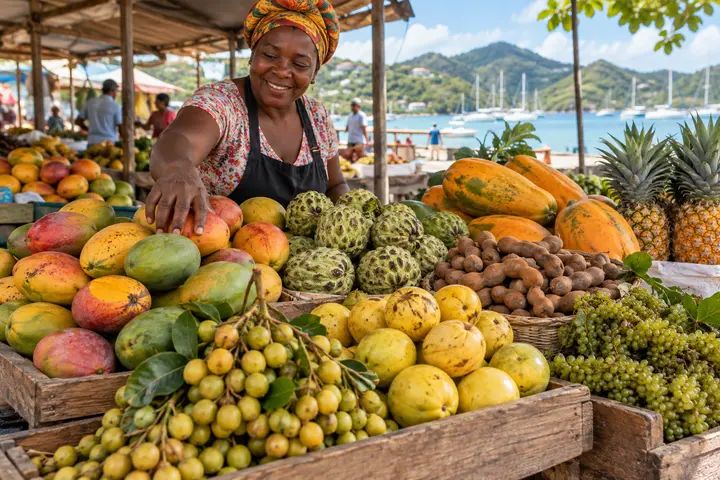
A roadside operation might be a permanent wooden shop, a mobile kitchen, a grill beneath a canopy or a table of fruit. Some focus on one item; others serve a full plate. The common thread is direct, practical service rather than a formal dining room. Quality depends on the individual vendor, not the size of the building.
Breakfast starts earlier than most visitors expect
Morning choices may include saltfish, chop-up, eggs, provisions, johnny cakes, patties or porridge. A breakfast cook may finish long before beachgoers arrive. Ask what is ready and watch how regular customers order. The menu can be spoken rather than printed, with combinations already familiar to local customers.
Lunch is often about the plate of the day
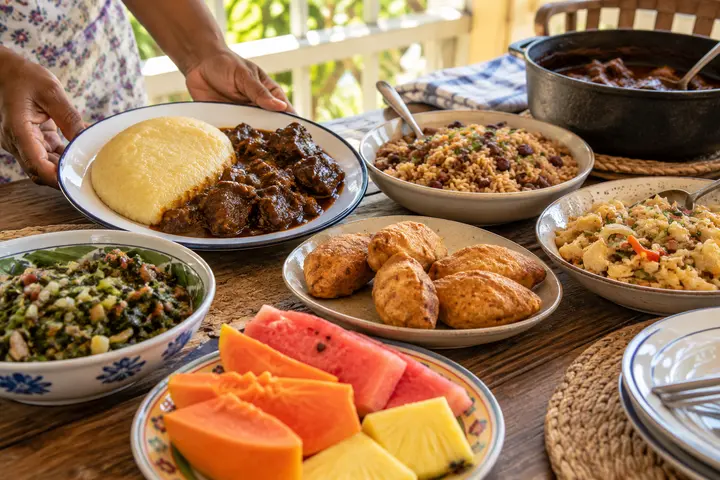
Rice, seasoned rice, pasta, provisions, stewed or baked meats, fish, vegetables and salad may be combined into a substantial meal. Popular food can sell out, and late arrival does not guarantee a fresh second batch. The daily offering may be more rewarding than requesting an off-menu “traditional” dish.
Evening grills create a social stop
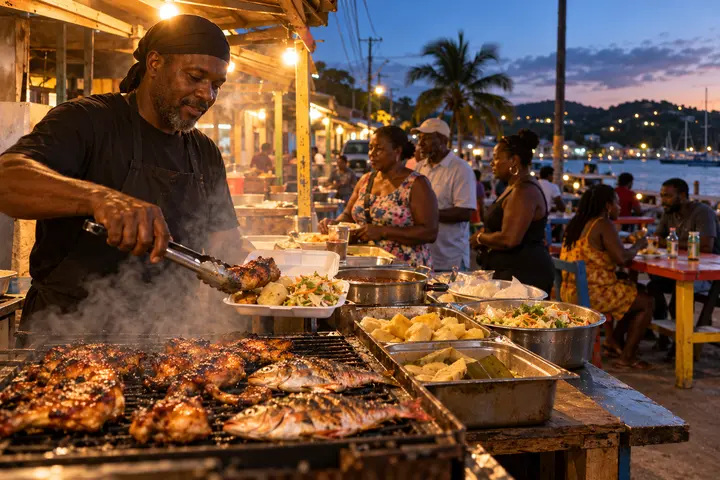
Chicken, pork, fish, ribs, corn and sides appear around grills as the day cools. Smoke and a small queue are part of the atmosphere. Some stands become informal gathering points where people collect dinner, talk and continue home; others add music and seating and grow into a weekend lime.
Cash, greeting and patience make ordering easier
Smaller vendors may prefer cash. Begin with good evening, confirm what is available and ask the total before leaving the counter. During a rush, complicated substitutions may not be possible. A queue often reflects freshness and reputation, so patience is more useful than demanding restaurant-style speed.
How to choose a stop
Look for active cooking, clean food handling and steady local trade. Ask a resident for a current recommendation because vendors move, change days or take breaks. Pair one good food stop with a nearby heritage site or activity rather than racing across Antigua to reproduce someone else’s online checklist.
A NOTE ON PERSPECTIVE
No single voice represents every Antiguan.
This guide reflects local experience and careful review, but communities, households and generations differ. Where a subject deserves several voices, treat this as a starting point rather than the final word.