LOCAL PERSPECTIVE
The short version
Tourism and yachting transformed English Harbour into one of Antigua’s best-known districts, creating businesses and skilled work while increasing pressure on housing, roads, land and seasonal livelihoods.
From naval landscape to heritage destination
The historic dockyard shifted from imperial military infrastructure to restored heritage site and working marina. Preservation created a powerful visitor attraction, but the story is complicated: architecture admired today was built and maintained through enslaved and later free labour. Tourism can protect buildings while still simplifying the history they represent.
Yachting created an international service economy
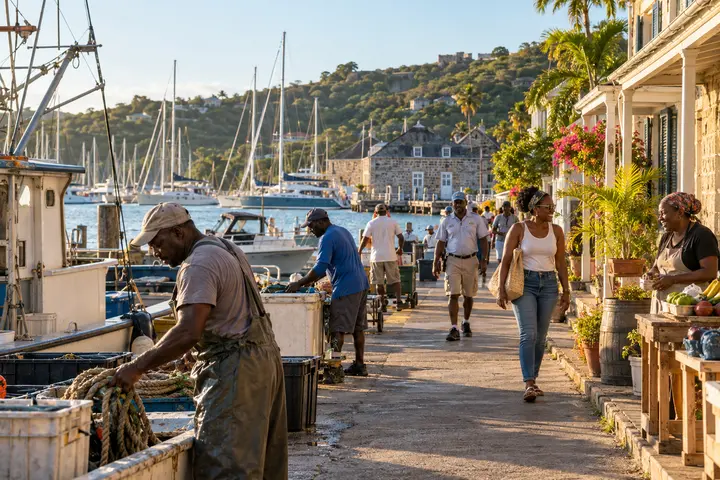
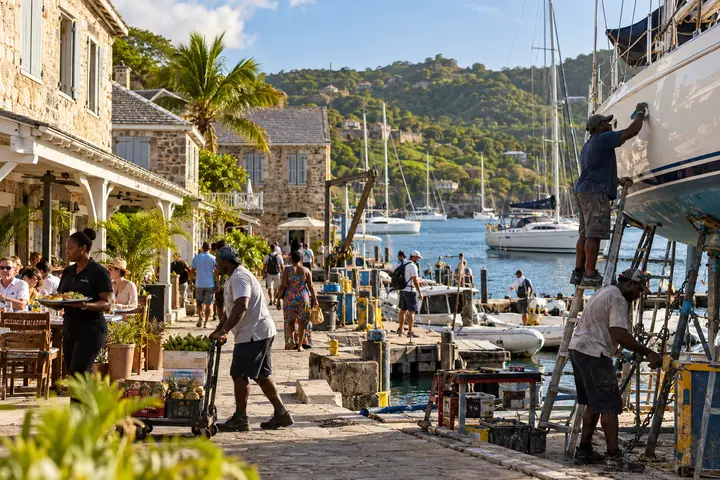
Visiting yachts require dockage, repairs, rigging, cleaning, provisioning, transport, accommodation and food. Antiguan workers developed expert marine skills and businesses connected to international clients. The harbour’s economy therefore includes far more than restaurants and hotels; technical labour keeps the destination functioning.
Restaurants and nightlife changed the district
Seasonal visitors support cafés, bars, fine dining, music and events that would be unusual at the same scale in a small residential area. This creates jobs and energy while changing noise, traffic and the cost of commercial space. The district can feel cosmopolitan during peak season and dramatically quieter afterward.
Housing and land became more valuable—and contested
Demand from tourism, yachting and international property buyers can raise rents and change who can live near work. Development also affects access, views, infrastructure and community character. Economic growth is real, but so is the question of whether employees and younger residents can afford to remain in the area they sustain.
Seasonality creates uneven opportunity
Peak months bring income, overtime and entrepreneurial openings; slower months bring reduced hours and uncertainty. Businesses must survive maintenance, storms and quiet periods between visitor seasons. A crowded marina can disguise the vulnerability of households whose annual income depends on a relatively short window.
Why locally owned tourism matters
Direct booking with local operators keeps more value and decision-making close to the community. Local ownership is not a guarantee of perfect practice, but it improves the chance that profits, skills and long-term planning remain connected to Antigua. Visitors can ask who owns, employs and supplies the experience they purchase.
A NOTE ON PERSPECTIVE
No single voice represents every Antiguan.
This guide reflects local experience and careful review, but communities, households and generations differ. Where a subject deserves several voices, treat this as a starting point rather than the final word.