LOCAL PERSPECTIVE
The short version
Rum in Antigua carries the history of sugar, colonial trade and enslaved labour while also belonging to modern hospitality, celebration and craft. A responsible tasting acknowledges both inheritance and flavour.
Rum begins with sugar—and sugar begins with power
Caribbean rum developed within plantation economies created for European profit and sustained through slavery. Molasses, a by-product of sugar production, became the raw material for distillation. Any history that jumps directly to cocktails leaves out the people whose coerced labour made the industry possible and the wealth it generated elsewhere.
From imported spirit to local identity
Over time, rum moved beyond plantation commerce into taverns, households, celebrations, punches and brand loyalties. Modern Antiguan rum culture includes locally associated bottlings, bars with extensive collections and family recipes. Not every Antiguan drinks, and participation should never be assumed, but rum remains a recognisable part of hospitality.
What determines how a rum tastes
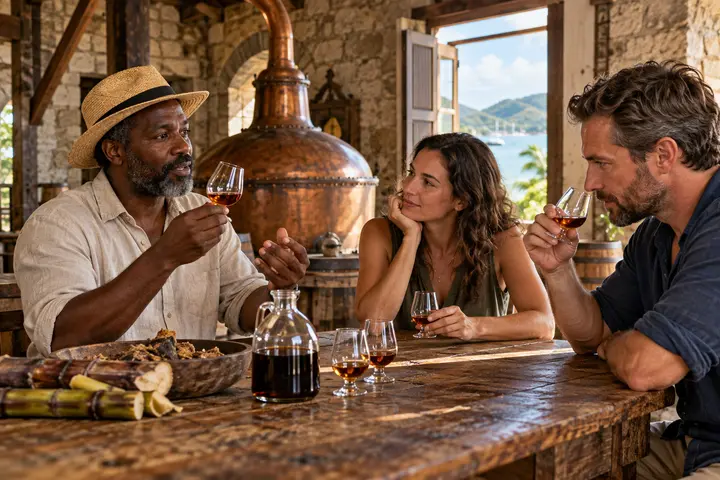
Fermentation creates the base flavours; distillation concentrates them. Still type, cut points, blending, ageing, barrel history and climate all affect aroma and texture. Colour alone does not prove age or quality. A thoughtful tasting compares smell, sweetness, spice, fruit, wood and finish instead of simply measuring strength.
Why rum punch varies so much
There is no single island-wide recipe. Citrus, sugar, spice, bitters, juice and rum are balanced differently by each bar or household. A sweet punch can conceal substantial alcohol, especially in heat. Drink slowly, alternate with water and arrange transport rather than judging strength by taste.
Modern craft and hands-on experiences
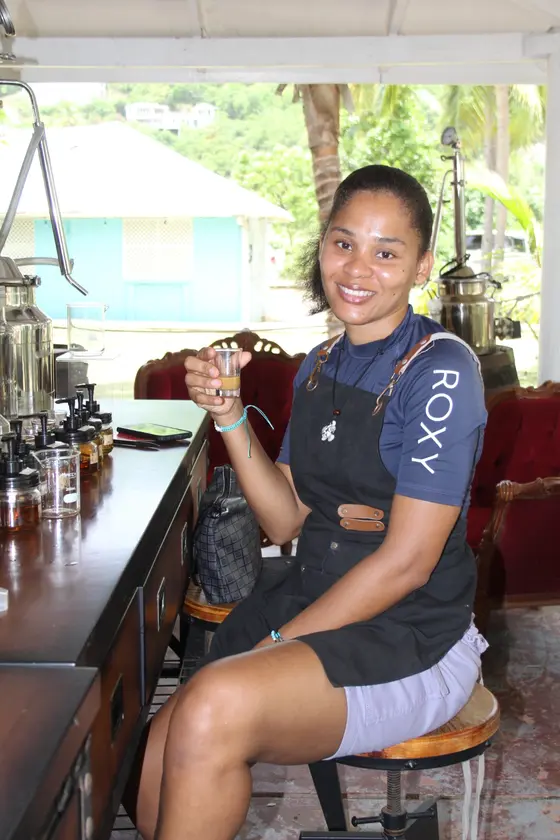
Small-still demonstrations and blending classes help visitors connect production decisions to flavour. The value lies in understanding the process, not consuming the largest quantity. A well-run experience discusses safety, history and responsible tasting while allowing participants to create a personal blend.
How to explore rum respectfully
Ask about origin and production rather than treating every bottle as interchangeable “Caribbean rum.” Acknowledge the difficult history alongside modern creativity. Follow age requirements, never pressure a non-drinker and remember that buying locally does not erase the past—but it can support people building a more honest and independent future around the product.
A NOTE ON PERSPECTIVE
No single voice represents every Antiguan.
This guide reflects local experience and careful review, but communities, households and generations differ. Where a subject deserves several voices, treat this as a starting point rather than the final word.