QUICK ANSWER
What you need to know
A well-paced English Harbour day can combine a water experience from Galleon Beach with time around Nelson’s Dockyard and the harbour. Book the time-sensitive activity first, leave travel and changing buffers, and treat the heritage visit as more than a quick photo stop.
Why English Harbour rewards a full day
English Harbour is a natural deep-water harbour on Antigua’s south coast, framed by hills, fortifications, marinas and beaches. Nelson’s Dockyard gives the area its best-known historic centre, while Galleon Beach and the Pillars of Hercules show the same geography from the water. Falmouth Harbour, immediately east, adds modern yacht and restaurant life.
The places are close in island terms but not one continuous attraction. A good plan groups them by side of the harbour and avoids repeatedly moving the car or taxi.
Nelson’s Dockyard: from naval base to living heritage
English Harbour’s value to the British Royal Navy began with its geography. The deep, narrow harbour and the hills around its entrance gave ships a sheltered place to anchor, maintain and repair vessels. A naval facility developed here during the eighteenth century, with wharves, workshops, storehouses and officers’ buildings adapted to Antigua’s climate.
This history is not only a story of admirals and Georgian architecture. UNESCO’s account of the site recognizes that generations of enslaved Africans supplied the labour and skills that made the Dockyard’s construction and operation possible. Their contribution is essential to understanding both the site and the wider colonial economy it served.
Admiral Horatio Nelson served in Antigua from 1784 to 1787, and the restored complex later became known as Nelson’s Dockyard. Today the historic buildings remain part of a working harbour as well as a museum and heritage destination. The area became a national park in 1984 and the Antigua Naval Dockyard and Related Archaeological Sites entered the UNESCO World Heritage List in 2016. Leave time to read the interpretation and look across the harbour basin: the surrounding heights, narrow entrance and buildings make much more sense when seen as one connected system.
Shirley Heights: signal station, garrison and gathering place
Shirley Heights was first used as a signal station and lookout during the War of American Independence. From the ridge, sentries could watch the approaches to English Harbour and raise an alarm with flags by day or signal guns at night. As the military position expanded, barracks, water cisterns and gun platforms were added to help protect the Dockyard below.
The military purpose has passed, but the relationship between the ridge and harbour is still immediately visible. The Lookout is now one of Antigua’s best-known viewpoints and a venue for music, food and gatherings. Visit in daylight if the geography and fortifications are your priority; if you are planning around an event, confirm the current programme and opening information on the National Parks Authority’s Shirley Heights page.
Freeman’s Bay: the history beneath Galleon Beach
The beach most visitors now know as Galleon Beach lies on Freeman’s Bay, just outside the inner harbour. Its modern identity is recreational—swimming, snorkeling, small boats and time by the water—but the bay also belongs to the wider historic landscape of English Harbour.
That history is not confined to standing buildings. After Hurricane Omar damaged part of the beach in 2008, human remains were exposed and carefully excavated by National Parks archaeologists. The published project summary does not support guessing who those people were or assigning them a date, so the responsible conclusion is simply that Freeman’s Bay preserves archaeological evidence of lives connected to this coastline.
Today Freeman’s Bay is where Skylork meets guests for activities from Galleon Beach. Knowing its older name changes the way the place reads: the beach, harbour entrance, surrounding military heights and present-day community are layers of the same landscape. Visitors should leave any possible artefact or bone undisturbed and report a discovery to the National Parks Authority.
Enter the water at Galleon Beach
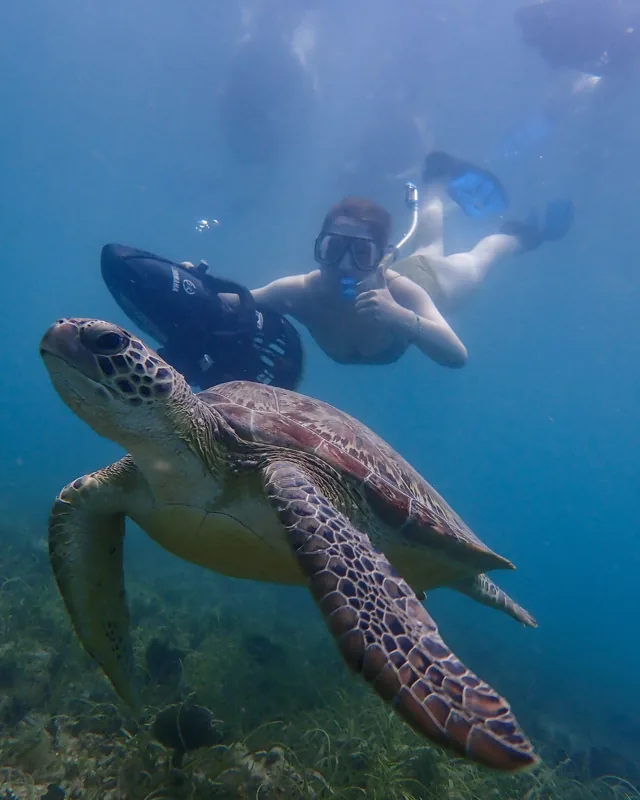
At Galleon Beach, the perspective drops from viewpoint height to sea level. A guided snorkel moves from sand toward seagrass, reef and the outer coastline. Scooter Snorkeling makes the powered glide part of the outing; Swim with Turtles keeps the experience traditional. Both require swimming ability.
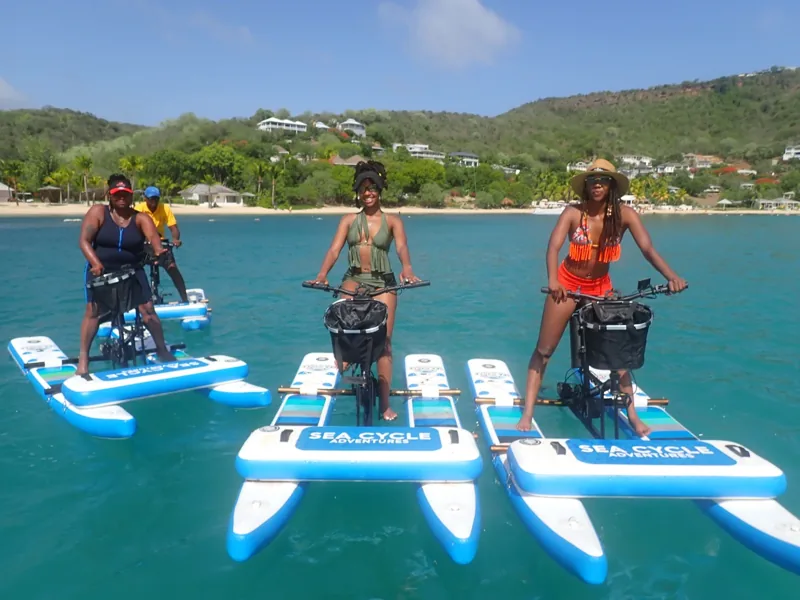
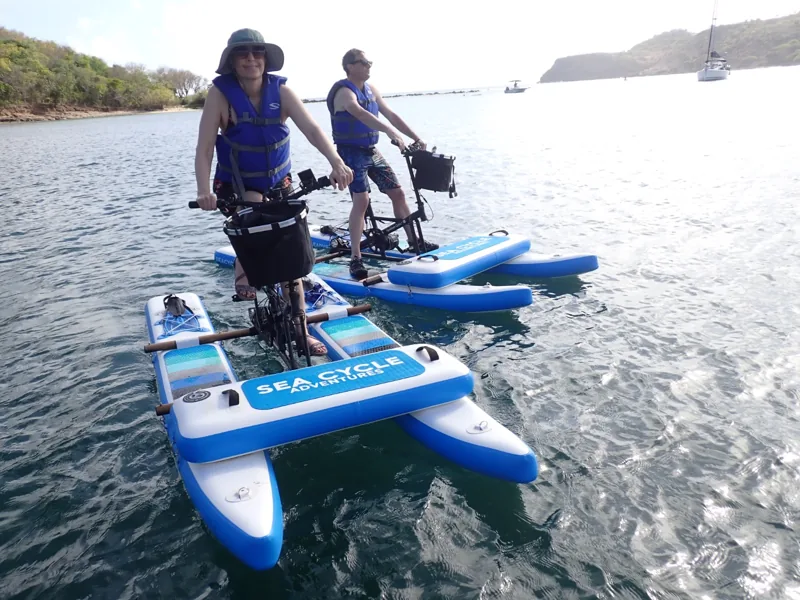
Visitors who want to stay above the surface can compare a Sea Cycle harbour experience or other sailing and kayaking options in the area.
Walk, sail or slow down
English Harbour also works without a packed attraction list. Walk within the established heritage areas, watch boats enter the harbour, spend time on the beach or choose a sailing excursion. Restaurants and bars are concentrated around the Dockyard, English Harbour and Falmouth area, but opening days and seasonal hours move—choose on the day rather than building an itinerary around an old directory listing.
Half day in English Harbour
- Choose either Nelson’s Dockyard and a viewpoint, or one water activity from Galleon Beach.
- Add a meal or short harbour walk.
- Keep travel time separate from the time at each attraction.
A half day is best when it has one anchor, not three rushed highlights.
Full day in English Harbour
- Book the time-sensitive water activity first.
- Allow changing and a relaxed meal.
- Visit Nelson’s Dockyard in the afternoon.
- Finish at a viewpoint or around the harbour if current opening times support it.
This order keeps wet gear and fixed departure times from disrupting the heritage portion of the day.
Plans for different visitors
For cruise visitors
Choose the earliest sensible activity, allow about an hour each way between the St John’s port area and Galleon Beach for planning, and protect a separate ship-return buffer.
For couples
Combine one shared activity with an unhurried meal and either the Dockyard or a viewpoint. A private snorkeling or boating format may suit couples seeking their own pace.
With children
Use the youngest child’s age and water confidence to choose the activity. Break the day with shade, food and hydration rather than stacking long visits.
FROM THE WATER
Plan for the transitions
Changing after the water, moving between sides of the harbour and finding the exact entrance for the next stop all take time. One fixed activity plus one flexible attraction creates more breathing room than a tightly stacked timetable.